Blog: Event management
Conditional logic: The smartest way to personalise the event journey at scale
26 April 2026 minute read

I’ve long argued that personalisation is the holy grail for event marketers.
Delegates want registration journeys that feel relevant and efficient. Sponsors expect qualified introductions rather than generic exposure. Speakers want smooth, professional onboarding.
We’re all accustomed to highly personalised B2C experiences in our daily lives – whether it’s from streaming services, ecommerce or hotels.
So it’s only natural that we expect to be sold (and interact with) business events in an similarly tailored way.
Every event professional I speak to understands the value of personalised marketing, registration and on-site experiences. And yet, relatively few are actually doing it – presumably because they imagine it will be difficult, time-consuming and expensive to implement.
The thing is, it’s not.
A common misconception is that this level of sophistication requires fancy new AI-powered tools, complicated integrations, or at least large internal resources. In practice though, one of the most powerful ways to personalise the attendee experience is also one of the most accessible, and you may already have it at your fingertips.
It’s good old conditional logic.
Used well, conditional logic allows event organisers to tailor registration forms, websites, communications, apps, check-in experiences and reporting through simple rules based on attendee data or behaviour. When those rules run consistently across one integrated event platform, they create the kind of seamless, personalised experience that drives attendance and improves operational performance.
For experienced event leaders, conditional logic is not a technical feature. It is a commercial advantage.
Most event managers will have used conditional logic when building registration forms, and maybe in a marketing automation context as well.
You know the kind of thing: IF customer selects ‘Other’ THEN display ‘Please describe’ field.
So far, so useful. But conditional logic can take you so much further than this.
When we built AttendZen, we engineered a consistent, joined-up conditionality into every part of the platform – because there are endless ways you can use this basic logic to segment, personalise, trigger actions and generally improve the attendee experience with minimal overhead. And it goes way beyond the registration form.
Let’s take a look.
What conditional logic means in practice
At its simplest, conditional logic is a system responding intelligently to inputs.
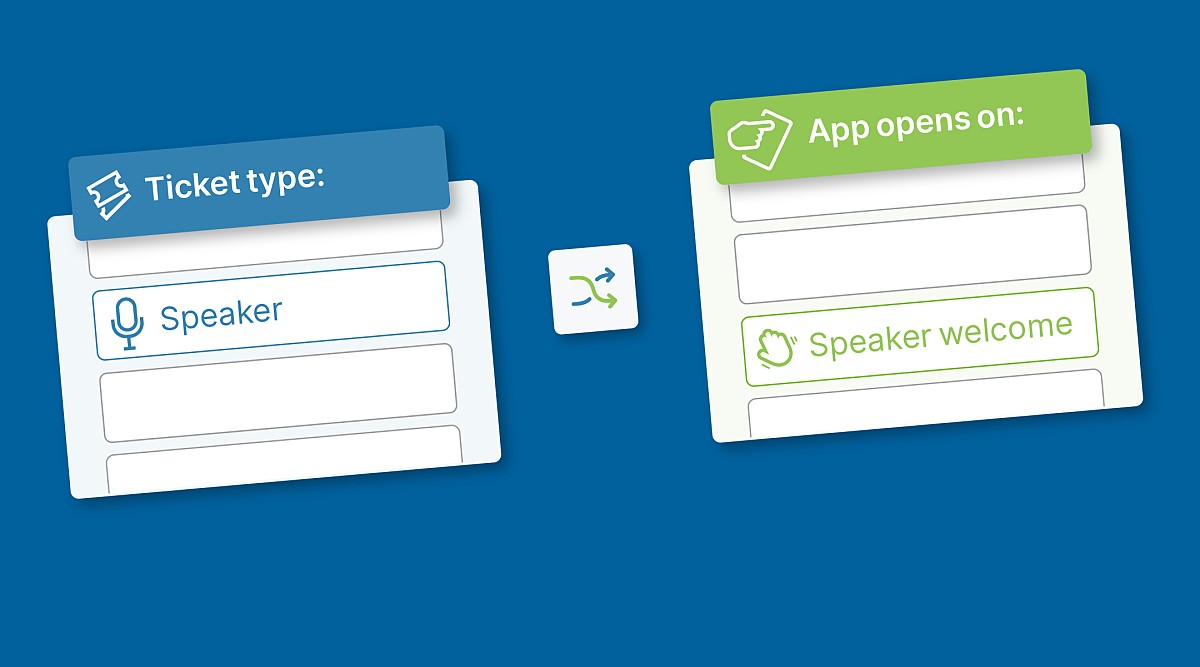
For example, if a registrant selects a certain ticket type, the platform presents the next most relevant step. Or if an attendee belongs to a certain audience segment, they receive the appropriate communications. If someone arrives onsite with VIP status, they are routed through the correct check-in process, and so on …
The principle is straightforward, but the impact can be really profound. Rather than forcing every user through the same static journey, the platform adapts in real time.
This matters because business event audiences are rarely homogenous. A first-time delegate has different priorities from a sponsor. A keynote speaker has different needs from an exhibitor. A procurement leader attending to evaluate commercial solutions behaves differently from a student attending to learn. Treating all of them identically leads to friction, unnecessary admin, and missed revenue opportunities.
Conditional logic solves this by ensuring each person sees only what is relevant to them.
Why conditional logic often outperforms AI
There is no shortage of hype around AI in events right now, particularly when it comes to personalisation. And while AI has its place, many event use cases actually benefit more from certainty than prediction.
Conditional logic works from known facts rather than assumptions. If an attendee identifies themselves as an investor, you can confidently invite them to investor networking sessions. If someone has not completed payment, you can trigger a reminder. If a delegate has selected healthcare interests, you can promote the healthcare content stream.
There is no guesswork involved and none of those pesky hallucinations.
Your team knows why a message was sent, why a field was shown, or why an attendee was prioritised.
Every action is based on agreed, visible, auditable business rules rather than opaque recommendations from some third-party, black box system.
For large-scale events, reliability matters. Organisers need systems that behave consistently across thousands of attendees, not tools that may or may not interpret context correctly. In many scenarios, well-designed conditional logic delivers more accurate and more commercially useful personalisation than trend-driven AI tools.
So, what can you do with it?
What you can achieve obviously depends on the extent to which workflows within your event platform (or wider tech stack) are equipped with conditional logic. But here are some examples of personalisation that our users deploy using the AttendZen platform.
Improving registration conversion rates
Registration is usually the most critical conversion point in the attendee journey, yet many forms still ask every user the same long list of questions. That approach creates unnecessary drop-off.
Conditional logic allows organisers to streamline forms dramatically. A delegate can be shown questions about role, purchasing authority and interests, while a speaker can be asked for their biography, AV requirements and session preferences. An exhibitor can be directed to stand details and operational contacts. Members of the press can be asked for publication information etc.
And you’re not limited to simple ‘if, then’ logic within the form itself. If you already know what attendee type a person is when you send them a marketing email or invite, you can literally pre-configure the form from first principles – so they only ever see a personalised registration flow.
Each audience segment sees a shorter, more relevant form, which improves completion rates and lets you capture better data.
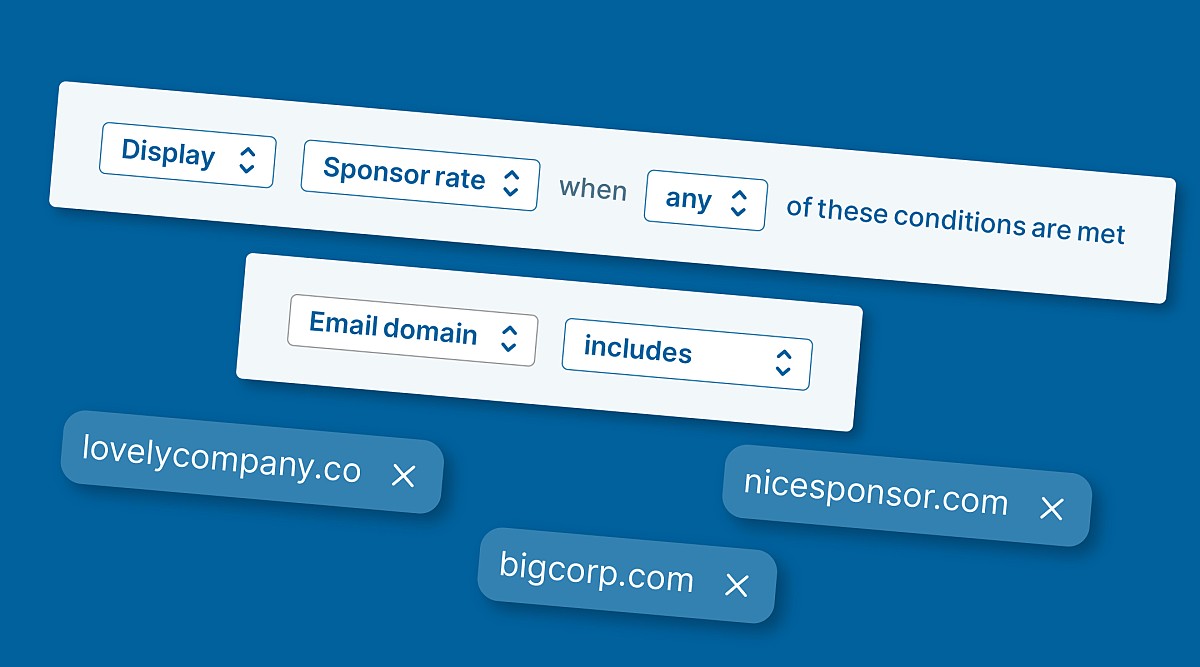
Group bookings can automatically reveal multi-ticket discounts. Returning attendees can see loyalty pricing. Association members can unlock preferential rates. Once early-bird deadlines pass, those ticket types can disappear automatically without manual intervention.
You can use any number of known properties to drive this logic – from tags to email domains.
These may seem like small tweaks, but collectively they have a significant impact on conversion and yield.
Turning event websites into dynamic conversion tools
Prospective attendees land on event websites with very different motivations – depending on their job, motivation etc. Yet most event websites remain little more than static brochures.
Conditional logic allows the website experience to adapt. A senior executive might see leadership roundtables and VIP networking opportunities first. A sponsor prospect can be directed towards audience demographics and partnership packages. A returning attendee may be shown a quick rebooking path rather than generic marketing copy.
This creates immediate relevance. When visitors quickly see content aligned to their needs, they’re more likely to register.
Smarter email marketing without manual segmentation
Email is still the highest-performing channel for marketing business events, but running campaign segmentation can easily soak up a lot of time as the team tries to grapple with managing static mailing lists.
Conditional logic can do away with much of that manual effort.
Instead of exporting spreadsheets and building one-off lists, the AttendZen platform can continuously segment audiences based on live data.
So, someone who has registered (but not yet paid) can receive a payment reminder.
Delegates who have not yet selected optional sessions can receive an agenda-building prompt. Exhibitors who have not completed their profile can be nudged with setup guidance.
As well as helping you by reducing the administrative overhead, you can even use logic to improve sponsor and exhibitor value. For example, attendees who clicked on sponsor content can receive relevant follow-up after the event.
The possibilities are endless. And because these rules run automatically in the background, communications stay timely and accurate without creating extra workload for the team.
Increasing app adoption and engagement
Another area where we’ve deployed conditional logic is the attendee app.
Event apps often struggle precisely because they present the same generic interface to everyone, regardless of why that individual is at your event.
Conditional logic changes that immediately. Finance professionals can see the finance track prioritised. Speakers can access a dedicated speaker area. Sponsors can be presented with lead retrieval tools and meeting schedules. First-time attendees can receive orientation content and networking suggestions.
AttendZen allows you to create multiple different navigation sets – in effect, different versions of app – where certain content can be visible or not based on simple logic, mapped to attendee type, status, tags – or any number of other data points.
As behaviour data builds, the experience can become even more relevant. An attendee who bookmarks sustainability sessions can be shown related roundtables. Someone with gaps in their schedule can be prompted with nearby sessions or networking opportunities.
When the app feels useful from the first login, adoption increases naturally.
Better onsite operations
Conditional logic is just as valuable onsite as it is online.
Check-in can route attendees intelligently based on status. For example, the AttendZen check-in app can be configured so that when a VIP guest arrives, a designated person on your team will immediately receive an SMS so you can greet them personally, whether you’re at the desk or not.
Similarly, unpaid registrants can be sent to the desk they need to visit to hand over the cash before they get their badge.
Any number of badge types and options, as well as access to special sessions can be managed efficiently and discreetly using conditional logic.
Even capacity management becomes easier. If a workshop reaches maximum attendance, walk-in registration can close instantly. If no-show rates create spare capacity, standby places can be released.
These automations help reduce queues, minimise errors and improve the arrival experience for everyone.
The advantage of an integrated platform
Conditional logic is vastly more powerful when it runs across a single connected platform rather than multiple disparate systems.
The problem when you operate one tool for registration, another for websites, another for email, another for apps and another for onsite check-in, is that fragmentation means attendee status often fails to carry across systems.
An attendee may be recognised as VIP in registration but treated as standard everywhere else.
The beauty of an integrated environment is that one rule can power the entire journey. If someone registers as a CIO from an enterprise organisation, that status can influence pricing, communications, agenda recommendations, options within the app, badge printing, networking access and post-event follow-up automatically.
It’s this seamless integration – more than any trendy AI – that actually unlocks true personalisation at scale. The goal should be one consistent logic layer running across every touchpoint – from the initial marketing email, through to the post-event survey.
Tips for implementing your personalisation plan
To get the most out of conditional logic, you really need to plan your data structure before you build the event.
Start by defining your personas. Clearly outline a handful of key attendee types that make sense for your community (eg Engineer, Executive, VIP, Press, Student, Exhibitor).
Next, map the journey. Write out which pieces of content, sessions, and questions are unique to each persona.
Now you can audit your data tags. If you’re using an enterprise CRM to track and store customer attributes, you’ll need to make sure these are consistent with the tagging or filtering your event platform uses so that the ‘if-then’ rules work correctly across the entire lifecycle.
Finally (as we never tire of saying) test, test and test again! Use dummy registrations for each persona and take the time to run through each journey just to check that a student isn't accidentally being asked which brand of bottled water they’d prefer in the limo that’s picking them up from the airport. Awks!
The event industry often gets super-excited by whatever technology is newest or most heavily marketed. But it’s always worth taking a breath and looking at whether you might already have the right solutions to hand.
Sometimes the tools that create the greatest impact are really the ones that solve practical problems consistently and reliably – using instructions you already know how to give
Conditional logic is one of those tools.
It gets you personalisation that is transparent, reliable and grounded in real attendee context.
When applied intelligently across registration, websites, marketing, apps and onsite operations, it can help attract more attendees, increase revenue, improve service levels and run leaner teams.